

The Dream and the Doubt
“Can I really succeed in trading?” and “How much money do I actually need to start?” If you’ve ever thought about trading—whether it’s stocks, forex, crypto, or commodities—you’ve probably asked yourself the same two questions. The central query remains: Can you succeed in trading?
I remember when I first got curious about trading. I was scrolling through social media, and every other post was some flashy trader showing screenshots of their profits. $500 turned into $5,000 in a week. Luxury cars parked in front of big houses. Exotic vacations “paid for by trading.” At first, I was hooked. I thought to myself: “If they can do it, why can’t I?”
But here’s the truth nobody told me back then: trading isn’t a get-rich-quick scheme. In fact, for most people, it’s the complete opposite. It’s mentally exhausting, financially risky, and emotionally challenging. Success in trading doesn’t come overnight, and it certainly doesn’t come without setbacks.
And yet—despite all this—trading is one of the few fields where ordinary people can create extraordinary results. But to do that, you need to separate the reality from the hype.
The Reality of Trading Success
Let’s address the elephant in the room: Do most people succeed in trading? The honest answer: No, most don’t.
Studies from brokerages and financial regulators often show that 70–90% of traders lose money in the long run. That means only a small percentage consistently earn profits.
Ultimately, understanding if Can you succeed in trading is possible requires a blend of education, realistic expectations, and emotional discipline.
Why is that? A few reasons stand out:
- Lack of Education: Many beginners jump into trading without understanding how markets actually work. They hear about technical indicators or follow tips from social media “gurus,” but they don’t truly understand price action, risk management, or trading psychology.
- Unrealistic Expectations: Too many traders start with the mindset of doubling their money in a week. This leads to overtrading, excessive risk-taking, and eventually blowing up accounts.
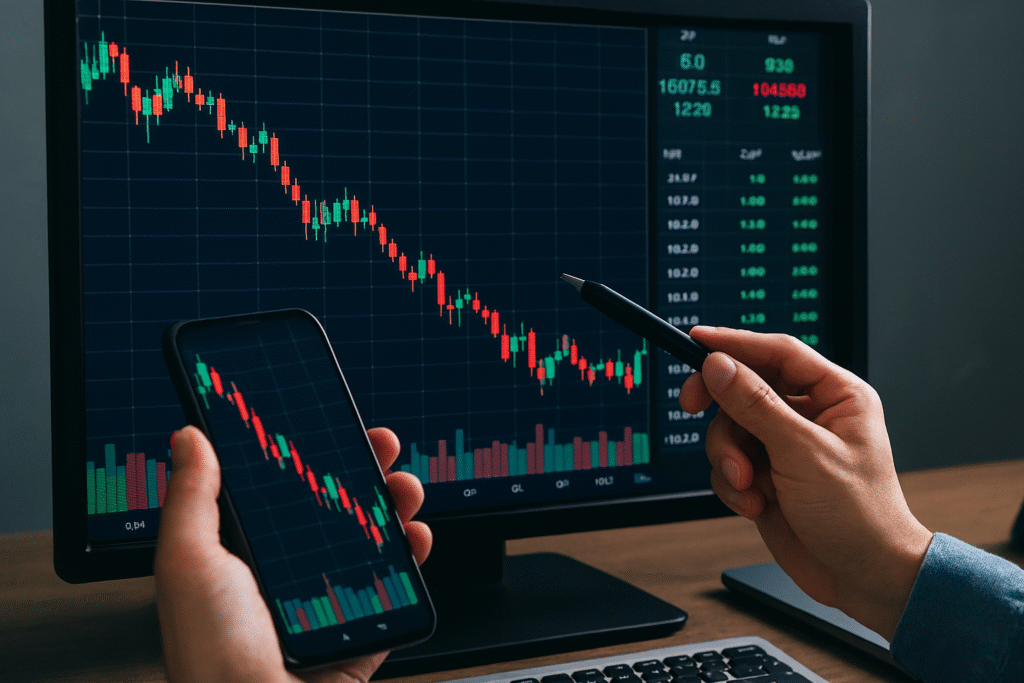
- Emotional Decision-Making: Trading is 80% psychology. Fear and greed often overpower logic. For example, a trader might close a winning trade too early out of fear of losing profits, or double down on a losing trade hoping it will “bounce back.”
- Poor Risk Management: Professionals always manage their downside before thinking of profits. Amateurs often do the opposite.
I’ll share a quick story here:
When I first deposited $500 into a trading account, I thought I was ready. I had watched countless YouTube videos, read blog posts, and even copied some strategies I found online. For a few days, I got lucky. My account grew to $650. I felt unstoppable, like a trading genius.
But then came reality. I placed a big trade with way too much leverage, convinced it was a “sure thing.” Within an hour, my $650 had dropped to $250. I was stunned. Instead of cutting my losses, I tried to “win it back.” That decision wiped my account to almost zero.
That was the day I realized trading isn’t about luck or shortcuts—it’s about discipline, patience, and skill.
Trading Is a Business, Not a Lottery
Here’s the mindset shift that separates winners from losers: treat trading like a business, not a gamble.
Think of it this way—if you opened a small shop, you wouldn’t expect to make a profit on day one. You’d invest money, plan your strategy, and slowly build. Trading is no different.
Professional traders don’t just “wing it.” They have a trading plan, risk management rules, and a system they follow consistently. They know that success isn’t about hitting one big jackpot—it’s about stacking small, consistent gains while protecting capital.
For example, many successful traders aim for just 1–3% growth per month. That might sound small compared to flashy social media claims, but it’s realistic and sustainable. Compounded over time, it can lead to significant wealth.
The Harsh Truth: It Takes Time
One of the hardest truths to accept is that trading takes time. You won’t master it in a week, or even a month. It can take 1–3 years of consistent practice before you become consistently profitable.
Think about it—doctors, engineers, or pilots spend years studying before they earn a salary. Why should trading be any different?
During this learning phase, many people lose money. But those losses should be viewed as “tuition fees” for your trading education. If you’re serious about trading, you’ll use them as lessons rather than failures.
Success Stories Do Exist
Now, before this starts sounding too discouraging, let’s be clear: success in trading is absolutely possible.
I personally know traders who started with modest capital—$2,000 or $5,000—and built it into a sustainable income over several years. They didn’t get rich overnight, but they treated trading like a craft. They journaled their trades, learned from mistakes, and refined their strategies.
One friend of mine, for example, trades part-time while working a full-time job. He doesn’t rely on trading to pay his bills, which takes away the pressure. Over five years, he’s grown his account consistently, averaging about 15–20% returns annually. That may not sound glamorous, but it’s far better than what most savings accounts or mutual funds offer.
Takeaway from Reality Check
So, can you succeed in trading? Yes.
Will it be easy? Absolutely not.
Trading success is possible, but only if you treat it like a profession, manage risk wisely, and stay patient through the learning curve.
How Much Capital Do You Really Need to Start Trading?
1. The Myth of Big Money: Do You Really Need Thousands to Begin?
One of the most common questions beginners ask is, “How much money do I need to start trading?” Many assume it takes tens of thousands of dollars to even step into the markets. The truth is, thanks to modern brokers, apps, and crypto exchanges, you can start with as little as $100 in some markets. But here’s the part that often gets ignored: just because you can start small doesn’t mean you should.
Trading with very little money is like trying to learn how to drive by entering a Formula 1 race. Technically possible, but very risky. With a small account, the temptation to over-leverage or take unnecessary risks is overwhelming. You might get lucky on one or two trades, but luck runs out faster than you think.
For example, I once funded a forex account with $200, thinking I could double it in a month. For the first few trades, it looked like I was on track. Then one bad position wiped out half my account, and in an attempt to recover, I lost the rest. The lesson was clear: the size of your account doesn’t guarantee success, but it determines how much breathing room you have.
So instead of focusing on the absolute minimum to start, think about how much you can afford to risk while still trading responsibly. If $500 is your maximum, treat it as tuition money for learning—not as a life-changing investment. If you have $5,000 or more, you can trade with smaller risks per trade and allow yourself to survive long enough to actually learn the craft.
2. Comparing Markets: Stocks, Forex, Crypto, and Beyond
The amount of capital you need also depends heavily on the market you choose. Every market has its own rules, barriers, and risks.
- Stocks: In the U.S., the famous Pattern Day Trader (PDT) rule requires at least $25,000 if you want to day trade frequently. That scares many beginners away. But swing trading or long-term investing can be started with far less—sometimes as little as $500–$2,000, especially with fractional shares now available.
- Forex: Probably the most accessible market. Some brokers let you start with just $100. The catch? High leverage. A tiny account can control thousands in currency, which makes profits tempting but losses devastating. Safer beginners usually start with $1,000–$2,000.
- Crypto: No official minimums here—you can literally start with $10 and buy a fraction of Bitcoin. That makes it attractive, but also dangerous because volatility is extreme. A $500 account could double in a week—or vanish in a day.
- Options and Futures: These are more advanced markets. Options contracts can be purchased for as little as $100–$500, but strategies like spreads or selling options require more capital. Futures contracts often need $1,000–$5,000 for micro lots and much more for standard contracts.
From this comparison, the message is simple: you don’t need massive capital to enter the markets, but each market has different rules. If you’re just learning, choose a market with lower barriers but don’t forget the risks that come with it.
3. The Balance Between Safety and Growth
Now comes the most important part—finding the right balance between starting small and trading safely. Think of trading like a marathon, not a sprint. The goal isn’t to make $10,000 in your first month, but to survive and grow steadily over time.
A useful rule of thumb is the 1–2% risk rule. This means you should never risk more than 1–2% of your account on a single trade. For example, if your account is $1,000, your maximum loss per trade should be $10–$20. If your account is $5,000, then it’s $50–$100 per trade. This small risk approach protects you from blowing up your account during inevitable losing streaks.
To put this into perspective, let’s imagine two traders:
- Trader A starts with $500. He risks $50 per trade (10% of his account). After three losing trades, he’s already down 30%. Emotionally shaken, he takes bigger risks and quickly wipes out the account.
- Trader B starts with $5,000. She risks $50 per trade (1% of her account). After three losing trades, she’s only down 3%. She still has plenty of capital to keep trading, adjust her strategy, and recover.
This example shows why having more capital isn’t about greed—it’s about survival. The bigger your account, the easier it is to apply sound risk management without feeling pressure to “bet big.”
The bottom line? Start with what you can afford to lose, but aim for an amount that lets you trade responsibly. If you only have $100–$500, use it for practice and education. If you have $2,000–$5,000, you can trade seriously with proper risk control. And if you have $25,000 or more, you unlock professional advantages like day trading stocks without restrictions.
Psychology, Risk Management & Strategies
1. The Psychology of Trading
If there’s one thing that separates beginners from professionals, it isn’t technical knowledge—it’s psychology. You can know every chart pattern, every indicator, and every strategy, but if you can’t control your emotions, you will lose money.
I learned this lesson the hard way. In my early days, I would often make a “perfect” trade setup. I’d enter at the right spot, place my stop-loss, and then start staring at the screen. The price would move slightly against me, and my heart would race. Fear would take over, and I’d exit too early—only to see the market turn in my favor right after I left.
That cycle—fear, impatience, regret—was a constant battle. And it wasn’t unique to me. Every trader faces it.
The two biggest emotional traps in trading are:
- Fear: Fear makes you exit winners too soon, or avoid taking trades even when your strategy gives a clear signal.
- Greed: Greed pushes you to overtrade, increase position sizes, or chase unrealistic profits.
Professional traders know these emotions never completely go away. Instead, they build systems to manage them. For example:
- Having a trading plan so decisions are pre-defined.
- Using stop-loss orders so you don’t second-guess when things go wrong.
- Limiting screen time to avoid emotional overreaction.
Think of trading psychology like a muscle—it gets stronger with practice. The more trades you make and review, the more you recognize your emotional triggers. Over time, you learn to stay calm under pressure and stick to your system, even when your instincts scream otherwise.
In short: mastering psychology isn’t about becoming emotionless—it’s about becoming disciplined.
2. Risk Management: The Trader’s Lifeline
If psychology is the mind of trading, risk management in trading is the heart. Without it, no trader survives.
The most important rule in trading is simple: protect your capital at all costs. Profits will come and go, but once you lose your capital, the game is over.
Here are the golden rules professionals follow:
- Never risk more than 1–2% of your account on a single trade.
- If you have $5,000, that means your maximum risk per trade is $50–$100. This ensures that even a losing streak doesn’t wipe you out.
- Always use stop-loss orders.
- Hoping that a losing trade will “turn around” is the fastest way to blow up an account. A stop-loss is your safety net.
- Position sizing matters.
- A $10,000 account doesn’t mean you should enter $10,000 trades. Proper sizing ensures your risk stays consistent.
- Focus on risk-to-reward ratio.
- A good trader looks for setups where the potential reward is at least 2–3 times greater than the risk. For example, risking $50 to potentially earn $150.
I remember speaking with a mentor who said, “Trading is not about how much you make, it’s about how little you lose.” That stuck with me.
Think of trading like a professional sport. A boxer doesn’t win by throwing wild punches every round—he wins by defending first, then striking when the opportunity is right. Similarly, risk management is your defense. It keeps you in the game long enough to capitalize on your winning trades.
Without risk management, even the best strategy is useless. With risk management, even an average strategy can lead to long-term success.
3. Practical Strategies for Growing Your Account
Once you’ve got your psychology and risk management in place, the next step is having a strategy to grow your account.
Here’s the mistake many beginners make: they jump from one strategy to another, hoping to find a “magic formula.” In reality, no strategy works all the time. What matters is consistency.
Here are three practical, beginner-friendly approaches:
- Trend Following
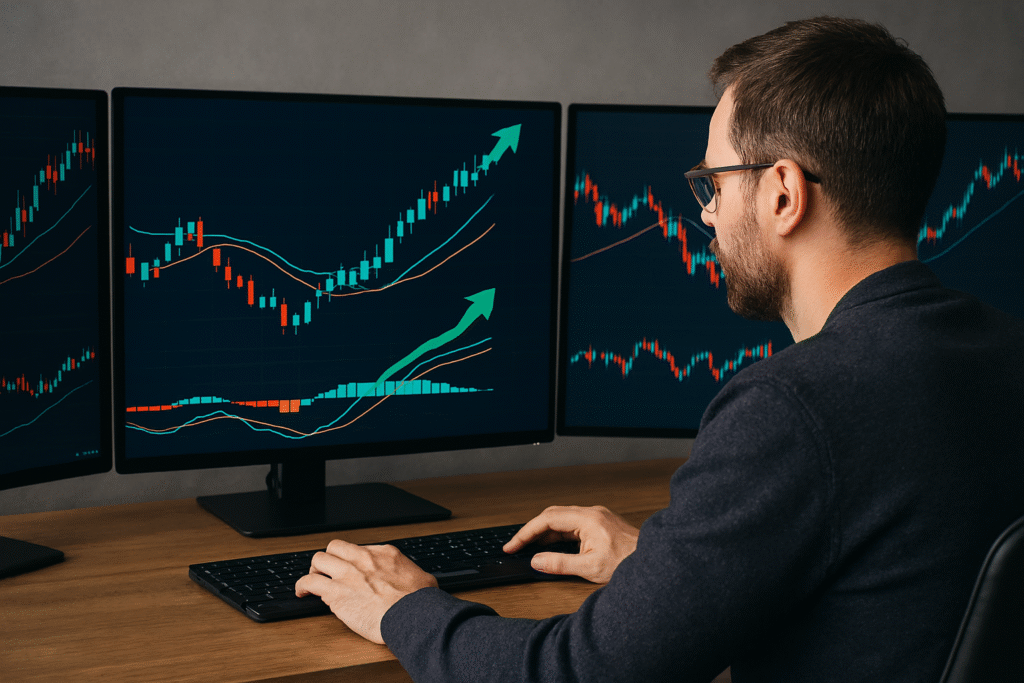
- This is the classic “ride the wave” method. Instead of predicting tops and bottoms, you follow the overall direction of the market. Tools like moving averages or trendlines help identify trends. It’s simple and effective for stocks, forex, and crypto.
- Breakout Trading
- Markets often move sideways before making big moves. Breakout traders look for those moments when the price breaks out of a range, usually on high volume. A well-placed breakout trade can capture large moves quickly.
- Swing Trading
- If day trading feels stressful, swing trading is a great middle ground. You hold positions for several days to weeks, catching medium-term moves. It requires less screen time and works well for people with full-time jobs.
No matter which strategy you choose, keep these principles in mind:
- Backtest first: Check how your strategy would have performed historically.
- Start small: Trade with small amounts while learning.
- Journal your trades: Write down why you entered, exited, and how you felt. Over time, this becomes your best teacher.
One of my most valuable lessons came from journaling. I noticed I was entering trades too early, out of excitement. By recognizing that pattern, I adjusted my approach—and my win rate improved significantly.
Remember: success in trading isn’t about mastering 10 strategies—it’s about mastering one approach that fits your personality and sticking with it.
For chart analysis Trading view
Frequently Asked Questions About Trading Success
When people first explore trading, they tend to ask the same set of questions. Let’s go through some of the most common ones and answer them honestly.
Q: Can trading make me rich?
Technically yes, but not overnight. The media loves stories of traders who turned a few hundred into millions, but those are rare and often exaggerated. For most, trading is about building consistent returns over time, not instant wealth. If your goal is to get rich quickly, trading will probably disappoint you. If your goal is to grow wealth steadily, then it can absolutely work.
Q: How long does it take to succeed in trading?
It depends on the person, but the average serious trader needs 1–3 years of consistent learning before becoming reliably profitable. Like any career, trading requires training. Doctors spend years in medical school. Engineers go through long courses. Why expect trading to be mastered in weeks?
Q: Do I need formal education to be a trader?
No degree is required, but self-education is essential. That means studying trading strategies, understanding risk management, and practicing with demo accounts or small amounts before going all in. Online resources, books, and mentorships can accelerate your learning curve.
Q: Can I trade while working a full-time job?
Absolutely. Many successful traders start part-time. Swing trading or longer-term investing works well for people who can’t stare at charts all day. You don’t need to quit your job to become a trader—in fact, keeping a stable income removes emotional pressure.
Q: What’s the success rate of traders?
Studies suggest only 10–20% of traders are profitable long-term. That sounds discouraging, but remember: most traders fail because they lack patience, discipline, or risk management. If you approach trading like a serious business, your odds improve dramatically.
Key Lessons to Remember Before You Risk Your Money
If I had to summarize everything I’ve learned about trading into a few hard-hitting lessons, it would be these:
- Capital doesn’t guarantee success—discipline does.
You can start with $100 or $100,000, but without proper risk management, both accounts can be blown up. - Patience is underrated.
The market rewards patience more than aggression. Sometimes the best trade is no trade at all. - Losing money is part of the process.
Every trader, even the best, takes losses. The difference is that professionals treat losses as lessons, not disasters. - Trading is not gambling if done right.
Gambling is betting blindly. Trading is managing probabilities with skill. The better your risk management, the more trading becomes a structured process rather than a coin flip. - Start small, scale later.
In the beginning, your goal should not be to get rich. It should be to survive long enough to learn. Once you have consistency, scaling your account and profits becomes natural.
I remember a mentor once told me: “Trading success is not about making money fast—it’s about not losing money fast.” That advice has stuck with me ever since.
Conclusion: Can You Really Succeed in Trading?
So, let’s return to the two questions we started with: Can you really succeed in trading? and How much capital do you need?
The truth is, yes, you can succeed in trading—but only if you treat it like a profession, not a lottery ticket. Success comes from discipline, psychology, and managing risk more than from picking the “perfect” trade.
As for capital, the amount you need depends on your goals and market choice:
- $100–$500: Great for learning and practice (forex, crypto).
- $1,000–$5,000: Enough to start trading responsibly with risk control.
- $25,000+: Professional level, especially for stock day trading in the U.S.
But remember this: it’s not about how much you start with—it’s about how well you protect and grow what you have.
If you’re serious about trading, start small, focus on learning, and build discipline. Use your early experiences as education, not as a make-or-break test. Over time, the combination of patience, strategy, and risk control can transform trading into a powerful tool for financial freedom.
At the end of the day, trading is one of the few paths where ordinary people can create extraordinary results. But only if they’re willing to respect the process.
So, can you really succeed in trading? Absolutely. But the real question is—are you ready to treat it like a business, stay patient through the setbacks, and give yourself the time it takes to grow? If the answer is yes, then trading can be one of the most rewarding journeys you’ll ever take.