

What is Trading And Investing:
Introduction
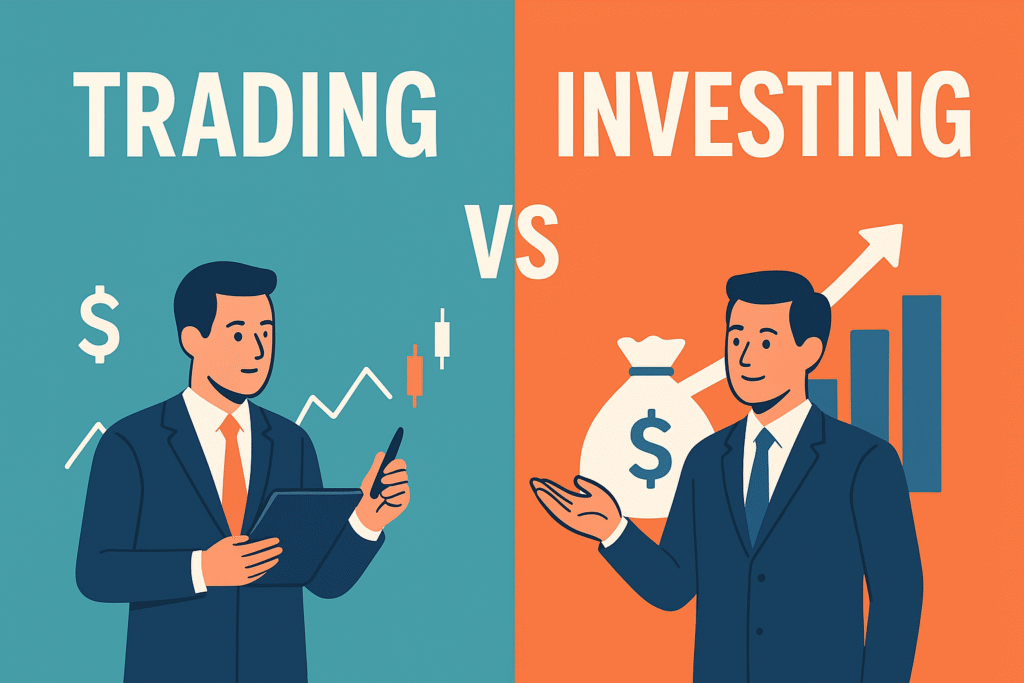
Imagine two friends, Rohan and Amit, who both want to grow their money. Rohan spends his mornings glued to his laptop, watching stock charts move up and down like a heartbeat. He makes quick decisions, buys some shares in the morning, and sells them by evening. Sometimes he makes a small profit, sometimes a loss, but the thrill keeps him going.
Amit, on the other hand, checks the market only once in a while. He has invested in a few strong companies like Infosys, HDFC Bank, and TCS. He doesn’t care about daily ups and downs. Instead, he focuses on the long-term journey, patiently waiting for years, believing that strong businesses will reward him with wealth.
Now, here’s the big question: Who is making the smarter choice—Rohan the trader, or Amit the investor?
This question—trading vs investing: which is best for you?—has been debated for decades in the financial world. Some argue that trading gives quick profits and opportunities, while others believe investing is the surest path to long-term wealth. The truth is, both approaches can work, but the “best” choice depends on you—your personality, goals, risk tolerance, and financial discipline.
In this article, we’ll dive deep into trading vs investing, understand the differences, explore real-life examples, weigh the pros and cons, and help you figure out which path is more suited for your financial journey.
What is Trading?
Trading is like sprinting in the world of finance. Instead of waiting years for returns, traders aim to take advantage of short-term price movements in stocks, commodities, forex, or cryptocurrencies.
In simple terms, a trader buys something today and sells it quickly—maybe in minutes, hours, or a few days—hoping to make a profit from the price difference.
Types of Trading
- Day Trading – Buying and selling within the same day.
- Example: Rohan buys 100 shares of Reliance at ₹2,500 in the morning and sells them at ₹2,540 before the market closes.
- Profit: ₹4,000 in a single day.
- But if the price falls instead, losses happen equally fast.
- Swing Trading – Holding a stock for a few days or weeks to capture medium-term price swings.
- Example: Buying Infosys shares before quarterly results and selling them a week later when prices rise.
- Scalping – Ultra-fast trading where positions are held for just minutes.
- This requires strong focus, lightning-fast decision-making, and often advanced software.
- Position Trading – Holding for weeks or months, but still shorter-term compared to investing.
Real-Life Example of a Trader
Think of someone like Rakesh, a 28-year-old software engineer who trades in his free time. He doesn’t want to wait 10 years for results. Instead, he sets aside ₹1 lakh for trading. Every morning before work, he studies stock charts and identifies opportunities.
One day, he spots HDFC Bank showing strength after RBI’s announcement. He buys 100shares at ₹1,500 and sells two days later at ₹1,560. That’s a profit of ₹6,000 in 48 hours. Exciting, right?
But the same Rakesh also once bought a stock before results, hoping it would go up. Instead, the company posted weaker earnings, and the stock fell by 8% overnight. He lost ₹8,000 in a single trade.
This story shows that trading is not just about skill—it’s about handling risk and emotions too.
Intraday trading
Intraday trading is one of the most exciting and fast-paced styles of trading in the stock market. Unlike long-term investing, where people hold shares for months or years, intraday trading focuses on buying and selling stocks within the same day to take advantage of short-term price movements. It requires a sharp eye on market trends, quick decision-making, and strong discipline because even a small move in the market can turn into profit or loss in just minutes.
Many traders rely on technical analysis, charts, and indicators to identify entry and exit points, while others follow news and events that may create sudden price changes. Risk management plays a very important role here, since the market can be unpredictable and emotional trading often leads to mistakes. Setting stop-loss and target levels before entering a trade helps in protecting capital and building consistency. Intraday trading can be rewarding for those who are well-prepared, but it is not suitable for everyone.
Beginners should start small, practice strategies, and gradually build confidence instead of rushing for big gains. With patience, discipline, and continuous learning, intraday trading can become a skill that supports financial growth and sharpens understanding of the stock market.
Swing Trading
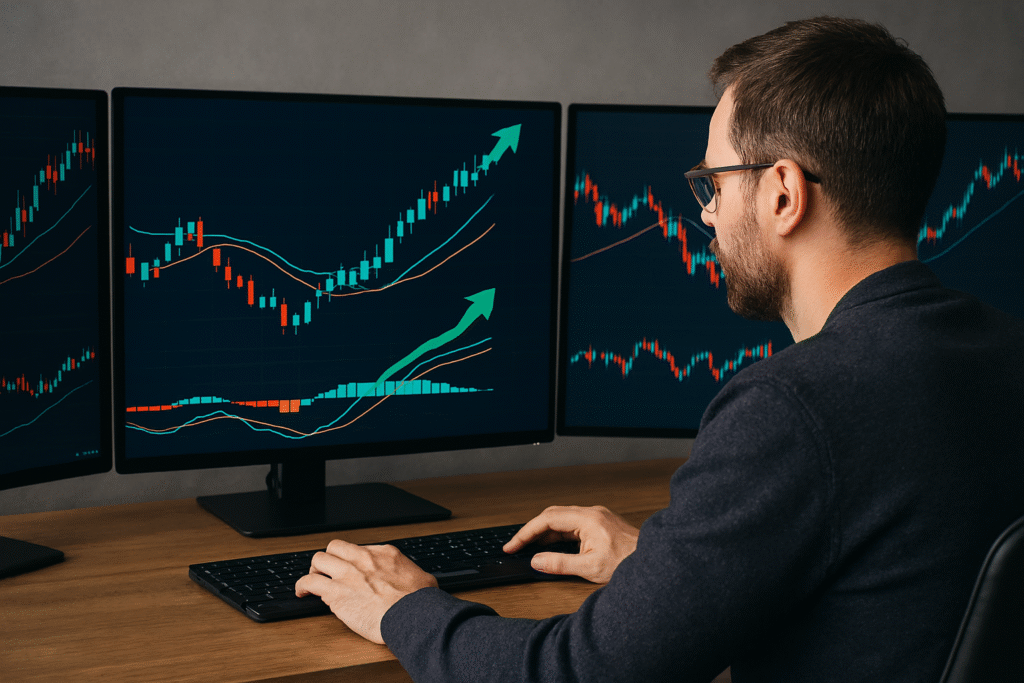
Swing trading is a popular trading style that focuses on capturing short to medium-term price movements, usually lasting from a few days to a few weeks. Unlike intraday trading, where positions are closed within the same day, swing traders hold their trades overnight and wait for the market to move in their favor. This approach gives more time for analysis and decision-making, making it less stressful compared to minute-to-minute trading.
Swing traders often rely on technical charts, patterns, and indicators to identify potential breakouts or trend reversals, while some also combine fundamental analysis to strengthen their decisions. Risk management is crucial here as well, since holding positions overnight exposes traders to unexpected news or global events that can impact prices suddenly. The advantage of swing trading is that it allows traders to benefit from larger price moves without being glued to the screen all day. However, patience and discipline are necessary because not every setup leads to profit.
Beginners should focus on learning chart patterns, setting clear stop-loss and target levels, and maintaining consistent strategies. With practice and the right mindset, swing trading can offer a balanced approach between short-term excitement and long-term investing.
Scalping
Scalping is one of the fastest trading strategies in the stock market, designed to make small profits from quick price movements throughout the day. Unlike swing or intraday trading, scalpers hold positions for just a few seconds to a few minutes, entering and exiting trades multiple times to capture tiny price changes. Since each trade targets only a small gain, the key to successful scalping is high accuracy, speed, and consistency.
Traders often use advanced charting tools, technical indicators, and even automated systems to identify opportunities instantly. Scalping requires intense focus and discipline because even a slight delay in execution can turn a winning trade into a loss. Risk management is especially important, as frequent trades mean frequent exposure to market fluctuations and brokerage costs. Many scalpers prefer highly liquid stocks or indices to ensure quick entry and exit without large price gaps.
This style of trading is not for everyone, since it demands quick decision-making, mental stamina, and the ability to control emotions under pressure. For beginners, starting with practice accounts or small positions can help build confidence. With the right strategy and patience, scalping can provide steady profits, though it requires significant effort and dedication to master.
Position Trading
Position trading is a long-term trading approach where traders hold stocks, commodities, or other assets for weeks, months, or even years to benefit from major market trends. Unlike scalping or intraday trading, which focus on short and quick price moves, position trading relies on identifying the bigger picture and riding long-term trends.
Traders using this style often combine fundamental analysis, such as company earnings, economic data, and industry outlook, with technical analysis to confirm entry and exit points. Since trades are held for a longer duration, position traders are less affected by small daily price fluctuations and market noise. This makes the strategy more relaxed compared to constant screen-watching required in shorter time frames. However, patience and strong discipline are key, as it may take time for trades to reach their potential.
Risk management is equally important, because holding positions for months can expose traders to unexpected global events or economic shifts. Many position traders set wider stop-loss levels and focus on the overall trend rather than small pullbacks. This style is well-suited for those who cannot monitor markets daily but still want to grow wealth through trading. With knowledge, patience, and strategy, position trading can be a powerful way to build steady long-term gains.

What is Investing?
Investing is the process of putting your money into assets like stocks, bonds, mutual funds, real estate, or businesses with the goal of generating returns over time. Unlike saving, where money is usually kept in a bank account for safety, investing involves a certain level of risk because the value of assets can go up or down depending on the market. However, the main advantage of investing is that it has the potential to grow wealth much faster than traditional savings.
When done with proper planning and discipline, investing can help people achieve major life goals such as buying a home, funding children’s education, or creating financial independence for retirement. The beauty of investing is that anyone can start, even with a small amount of money. What matters most is consistency, patience, and an understanding of how different investments work. By focusing on long-term growth rather than short-term market noise, investing becomes a powerful tool to build financial security and stability.
Why is Investing Important?
The importance of investing goes beyond just making money. Inflation slowly reduces the value of savings over time, which means that the money you keep idle today will have less purchasing power in the future. Investing helps protect and grow your wealth by generating returns that can outpace inflation.
For example, keeping ₹10,000 in a bank account for ten years might give you only a small increase through interest, but investing the same amount in quality stocks or mutual funds could multiply that money several times, depending on market performance. Another reason investing is important is financial freedom. Most people work for money, but with smart investments, your money starts working for you. This allows you to create multiple income streams, reduce dependence on salary, and eventually achieve independence to live life on your own terms.
Investing also helps in building a safety net for emergencies. A well-diversified portfolio can provide stability during uncertain times, ensuring that your financial goals are not easily derailed. In short, investing is not just about growing money—it’s about securing your future.
How to Start Investing Wisely?
Starting your investment journey does not have to be complicated. The first step is understanding your financial goals—whether it’s saving for retirement, buying property, or building wealth. Next, determine your risk tolerance.
Some people are comfortable taking higher risks for bigger rewards, while others prefer safer investments. Once you know your goals and risk profile, you can choose the right investment vehicles. For beginners, mutual funds, index funds, or exchange-traded funds (ETFs) are good options because they offer diversification and professional management. It’s also important to start small but stay consistent.
Even investing a fixed amount every month through a systematic investment plan (SIP) can grow into a significant sum over time, thanks to the power of compounding. Another key aspect is education—learning about the stock market, bonds, real estate, and other options before putting your money at risk. At the same time, avoid chasing quick profits or falling for “get rich fast” schemes, as these usually lead to losses. Finally, always keep an emergency fund separate from your investments so you don’t have to withdraw money during unexpected situations. By staying disciplined, patient, and informed, you can build a strong foundation for long-term wealth creation. (Investing App-Groww)
Conclusion :-
Choosing between trading and investing depends on your personality, goals, and risk tolerance. Trading is ideal for those who enjoy fast-paced markets, quick decision-making, and short-term profits. It requires constant monitoring, technical analysis, and the ability to handle stress, as markets can change in minutes.
Investing, on the other hand, is better for those seeking long-term wealth creation and financial stability. It focuses on holding assets over time, leveraging compounding, and making informed decisions based on fundamentals. While trading can offer immediate rewards, it also comes with higher risks, and losses can happen quickly. Investing may take patience, but it provides a more predictable path toward financial security.
Many successful individuals combine both approaches, allocating a portion of their capital for trading to explore short-term opportunities, while keeping the rest invested for long-term growth. Ultimately, the best choice is the one that aligns with your lifestyle, financial goals, and comfort with risk. Understanding your strengths, learning continuously, and maintaining discipline are key to achieving success, whether you decide to trade, invest, or blend both strategies.
financial success is a journey, not a race. Stay patient, learn continuously, and take disciplined steps every day. Every small effort you make today compounds into the wealth and freedom of tomorrow. Dream it, plan it, achieve it!


Pingback: Why new traders lose money in the Stock Market 2025
Pingback: save-invest-smartly-in-your-20s-sip-gold